
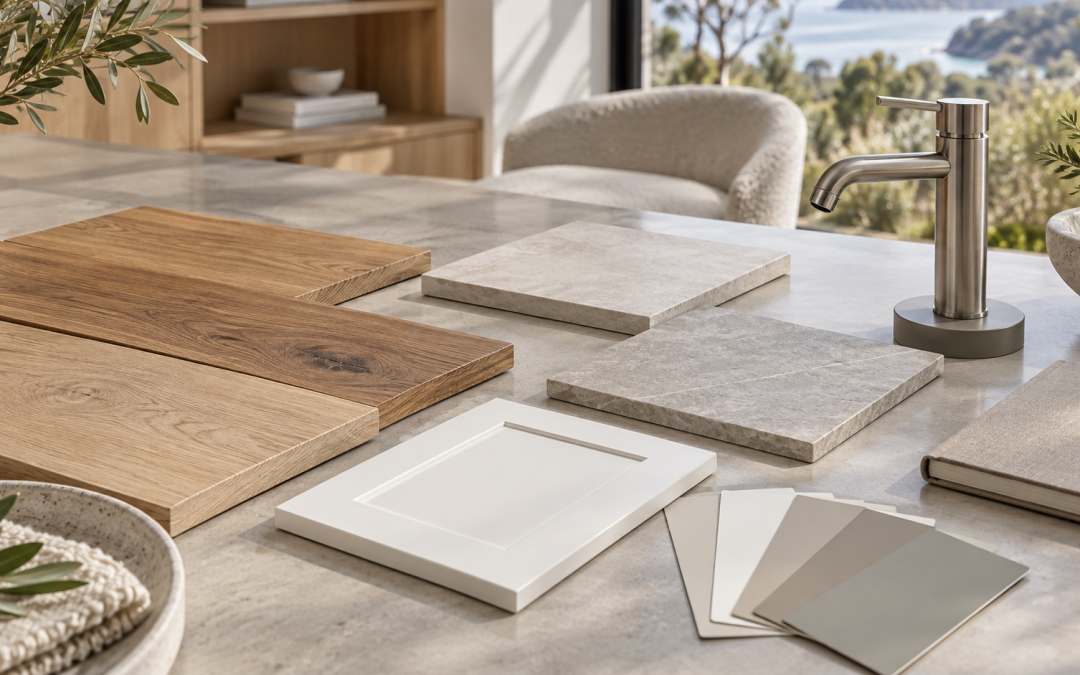
A tile can look perfect on its own and quite different beside your chosen cabinetry. A tap that catches your eye in a showroom may not suit the basin you have selected. These are everyday decisions in a custom build, and they are easier to manage when you compare the whole room rather than buying one product at a time.
Working with a custom home builder in Warwick QLD gives you the opportunity to connect appearance with practical use. Freeman Quality Builders helps homeowners plan custom homes in Warwick around their preferences, block and budget. A clear approach to finishes helps turn your ideas into selections that can be specified, ordered and installed.
Begin with the way you want the home to feel
Before collecting dozens of samples, agree on a simple direction. You might prefer a warm, relaxed interior with timber tones, or a lighter scheme with restrained colours and clean lines. Describe the feeling in everyday language and choose a small set of images that show it consistently.
Explain what you like about each image. It may be the colour balance, the floor texture or the contrast between cabinets and walls. Without that explanation, two people can look at the same photograph and take away very different ideas.
Keep the overall direction flexible enough to accommodate practical alternatives. A useful design brief guides choices without making every item depend on one exact product that may be unavailable when it is needed.
Compare samples together, in the right position
A photograph on a phone is helpful for inspiration but should not be the only basis for a final selection. Ask suppliers about physical samples and look at the materials together. Place the flooring beside the cabinetry and benchtop sample, then add the proposed wall colour and hardware finish.
Hold or position samples in the way they will be used. A wall finish viewed upright can look different from the same sample lying flat on a table. Where possible, compare the combination in natural daylight and under the type of artificial light you intend to use.
Look for consistency rather than an exact match between every surface. Too many similar but slightly different whites, greys or timber tones can be difficult to judge separately. A small, coordinated palette is easier to assess than a collection of unrelated favourites.
Choose for the activity in each room
The right selection depends on what the surface will experience. A family entrance, a quiet bedroom and a bathroom have different demands. Describe the expected use to the builder and supplier, including pets, children, frequent visitors or muddy shoes coming in from the yard.
Ask whether the product is suitable for the proposed location and how it should be maintained. Review the manufacturer’s information rather than relying on a broad description such as “hard-wearing” or “easy-care”. Find out which cleaning products are recommended and whether there are particular limits or precautions.
For wet areas, outdoor surfaces and other demanding locations, have the suitability of the complete system confirmed. An attractive tile or panel is only one part of an installation. Avoid making technical decisions from appearance alone or assuming that similar-looking products perform in the same way.
Check the details where products meet
Finishes rarely exist in isolation. Flooring meets skirting and doorways. Benchtops meet splashbacks. Taps need to work with the basin and its position. These junctions deserve attention before orders are placed.
Discuss edges, trims, transitions and visible joins with your builder. Ask how the selected products fit together and whether a change in one item affects another. A different floor thickness, for example, can create questions that should be resolved as part of the design and installation planning.
Bring complete product information to the discussion, including model numbers and dimensions where available. “A black tap” or “a large white basin” is not a precise specification. A clear record reduces the chance of two different products being treated as interchangeable when they are not.
Compare the installed choice, not just the shelf price
Two products with similar purchase prices can involve different installation requirements. Ask what is included when comparing options: the product itself, preparation, trims, accessories, delivery and installation may all need consideration.
Discuss selections against the allowances and scope for your own project. If a preferred finish falls outside the planned allowance, ask for the effect on the total before approving it. Small upgrades across many rooms can add up, so keep a running record of agreed choices and their cost implications.
Prioritise the features you will notice and use every day. You may decide to invest more in a frequently used surface while keeping another area simpler. The useful question is whether the selection supports your needs and fits the overall project, rather than whether it is the most expensive option on display.
Ask when each decision is needed
Your builder can explain which selections need to be settled first for your particular build. Some choices affect other trades or need time for supply. Leaving every finish until the last moment can narrow the available options and make coordination harder.
Ask for a clear selection sequence and record the agreed decision dates. Confirm availability before committing to a product, especially if you are comparing a special-order item with a readily available alternative. Do not assume that a showroom sample means the required quantity is immediately available.
If an item becomes unavailable, compare the proposed substitute properly. Check its appearance, dimensions, intended use and any effect on neighbouring finishes. A substitution should be an informed choice, not simply the nearest colour found under time pressure.
Keep one reliable selection record
Create a single list that identifies the room, product, supplier, colour, finish and model or product code. Attach the relevant specifications and note any decisions still awaiting confirmation. This is more reliable than spreading choices across text messages, screenshots and loose sample labels.
Review the list with your builder before ordering. Check that names and codes match the actual samples you approved, and clearly identify any superseded selections. If you change your mind, discuss the implications before treating the new choice as final.
Keep care instructions with the household handover information. Knowing how to clean and maintain the chosen materials helps you look after the finished home from the first day, rather than searching for product details after a spill or mark appears.
Frequently asked questions
Do all finishes in a custom home need to match?
No. A coherent scheme can include contrast and variety. The aim is for the materials to work together and suit their rooms. Comparing samples as a group helps you decide whether a difference looks intentional or distracting.
Can I choose a product I have found myself?
Bring the details to your builder before purchasing it. Suitability, supply arrangements, dimensions and installation requirements need to be considered. Confirm who is responsible for ordering and checking the item so there is no confusion later.
What if I cannot decide between two finishes?
Return to your original brief and compare the choices against everyday use, maintenance and the wider palette. Ask for samples and product information. A useful decision is one you can explain in practical terms, not only one that looks appealing online.
Plan your custom home with Freeman Quality Builders
If you are looking for a custom home builder in Warwick QLD, speak with Brent at Freeman Quality Builders about your ideas and priorities. Call 0401 280 814 or contact the team to discuss your project. Bring your inspiration images and questions so your design and finish selections can be considered together from the start.
